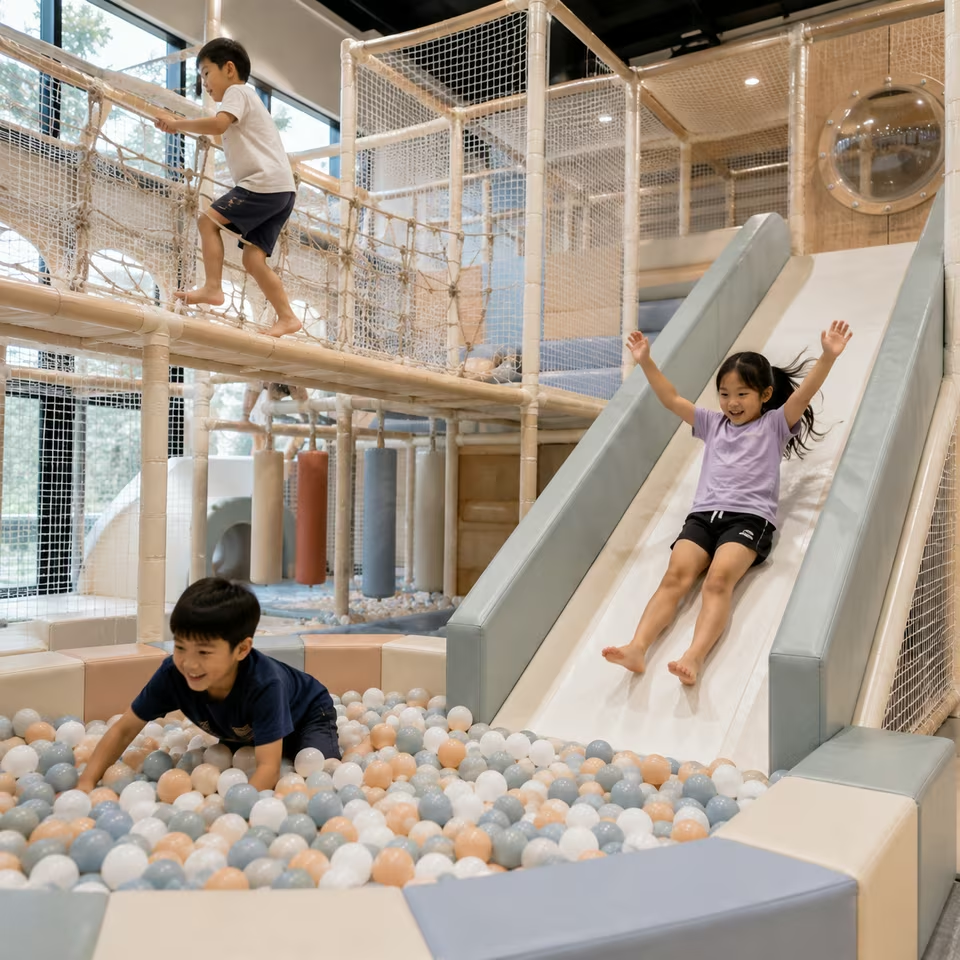
What kind of soft play is suitable for children ages 7-8?
Look for play environments with longer routes, varied physical challenges and enough choice for children to change how they move through the space. Balance, coordination, climbing-style movement, obstacle routes and different transitions can all contribute when the individual equipment is appropriate for the child.
What should I look for when buying soft play for a 7-8 year old?
Consider movement variety, route complexity, replay value, usable space, coordination demands and how the child can move between challenges. Also check the intended age range, dimensions, capacity, configuration and use guidance for each product.
What play equipment is suitable for a 7-year-old?
Children around seven may enjoy equipment that provides connected physical challenges, alternative routes and opportunities to use balance, coordination and movement strategy. Suitability still depends on the individual child and the specifications of the equipment.
What play equipment is suitable for an 8-year-old?
Children approaching eight may look for longer and more varied movement experiences, including routes that combine several different challenges. Useful progression can come from agility, control, route complexity and self-created goals rather than simply making equipment taller.
Is soft play suitable for 7-8 year olds?
It can be, but the design needs to match more capable and active play. Simple toddler-style soft play may no longer provide enough variety, while larger structures, connected routes, obstacle-style elements and more open-ended movement possibilities can create a more engaging experience when appropriately designed.
What makes soft play challenging for older children?
For older children, challenge can come from route length, balance, agility, movement precision, transitions, sequencing and having several ways to navigate the same environment. Increasing height is only one possible design variable.
Do children ages 7-8 need larger play structures?
Not always, but larger structures can become useful when the extra scale creates longer routes, more movement variety and meaningful choices. A large structure with repetitive or disconnected activities is not automatically more engaging.
Are obstacle courses suitable for children ages 7-8?
Obstacle-style play can be engaging for this age because it can combine different movements into a continuous route. The individual elements, configuration and level of challenge should still be appropriate for the intended users and use environment.
Can soft play for ages 7-8 include group challenges?
Yes. Children at this age may create informal rules, cooperative routes, races or other shared challenges. A layout with multiple routes and enough circulation can support social play without requiring competition to be the main experience.
Can soft play for ages 7-8 work in a small indoor space?
Yes, although the layout needs to work harder. Connected movement, route variation and replay value are particularly important when space is limited. A compact but well-connected course can offer more useful play than a larger collection of unrelated features.