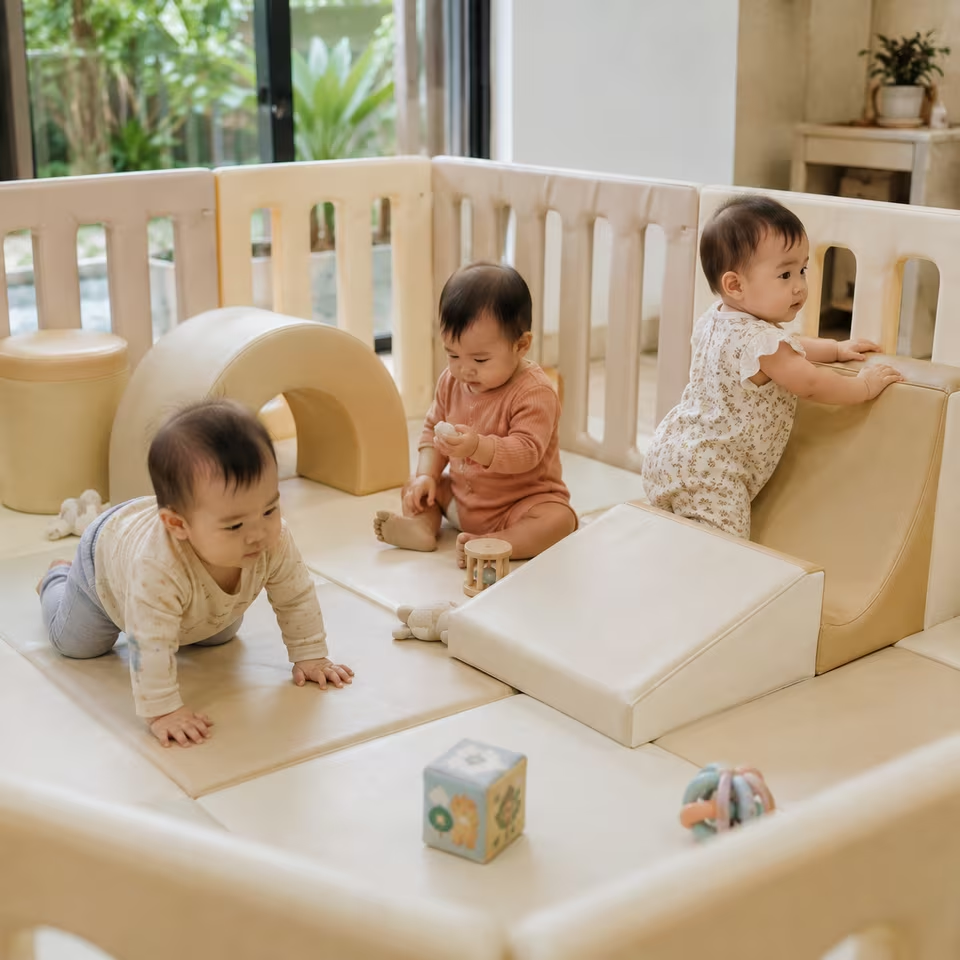
During the first year, play develops from close-to-floor sensory experiences toward increasingly independent movement, making simple, comfortable and closely supervised play spaces especially valuable.
The first year includes rapid changes in how babies experience and move through their surroundings. Early play may center on looking, reaching, touching and changing body position on a comfortable floor surface. As movement becomes more independent, babies may begin rolling, sitting, moving across the floor, pulling toward supported positions and exploring nearby objects and surfaces in new ways. A well-considered play environment for this age does not need to be complex. Clear floor space, approachable forms, gentle changes in level and opportunities for close interaction can provide a rich setting for everyday exploration while allowing adults to remain nearby.
Highlights
Prioritizes comfortable close-to-floor play
Supports changing movement abilities throughout the first year
Encourages reaching, touching and exploring nearby surroundings
Uses simple forms and approachable spatial changes
Keeps adult supervision and interaction close to the play experience
Allows the environment to remain useful as movement becomes more independent
Experience Keywords baby play · infant play · floor play · sensory exploration · early movement · reaching · touching · rolling · early crawling · supported movement · gentle exploration
Development Context
The first year covers substantial changes in movement and interaction, so play experiences can look very different between younger and older babies.
Early experiences often happen close to the floor through looking, reaching, touching and changing body position.
As babies become more mobile, their immediate surroundings become something they can actively move toward and investigate.
Rolling, sitting and early floor movement can change how babies approach objects, surfaces and nearby spaces.
Later in the first year, some babies may begin exploring more upright positions with appropriate support while others continue to prefer floor-level movement.
Repeated interaction with familiar surroundings can remain interesting as babies discover new ways to approach the same space.
Individual development varies considerably, so chronological age alone should not be treated as a precise measure of movement ability.
Selection Guidance
Start with the child's current movement abilities rather than choosing play features from age labels alone.
Prioritize usable floor-level space where babies can move, turn and explore without unnecessary complexity.
Choose forms and features that are visually simple and approachable from the child's current body position.
Use gentle spatial variation rather than relying on large changes in height to create interest.
Consider how easily an adult can remain close, interact and reach the child throughout the play area.
Avoid overcrowding the space with too many features; open floor area can be an important part of the play environment at this age.
Consider how the environment can remain useful as the child progresses from relatively stationary play toward more independent movement.
Evaluate individual components for their intended age, use conditions and manufacturer guidance rather than assuming every soft play feature is appropriate throughout the entire 0-1 age range.
FAQ
What kind of soft play is suitable for babies 0-1 years?
For this broad age range, begin with the baby's current movement abilities rather than age alone. Floor-level space, approachable soft forms and simple opportunities to reach, touch and move around can be more useful than a complex play structure.
Can babies under 1 use soft play?
Soft play can form part of a baby's play environment when the individual features are appropriate for the child's current abilities and intended use. The first year changes quickly, so an environment suitable for a younger baby may be used very differently by a baby approaching one year.
What should a play area for a baby include?
Useful elements can include comfortable floor space, simple soft forms, room for movement and opportunities to interact with nearby surroundings. The exact setup should reflect what the individual baby can currently do.
Is a large soft play set necessary for a baby?
No. More equipment does not automatically create better play. During the first year, usable floor space and a small number of well-chosen elements can offer more appropriate opportunities for everyday exploration.
How should I choose soft play for a 1-year-old?
Look at how the child currently moves and explores. A child approaching one year may be crawling, transitioning between positions or beginning to explore supported upright movement, but abilities vary considerably between children.
Should baby soft play have different levels?
Small and approachable changes in level can add spatial variety when appropriate for the child and the specific play feature. Greater height is not necessary to make an environment interesting for this age.
How much space does a baby need for soft play?
There is no single ideal size. What matters is preserving enough usable space for the child to move and for an adult to remain close, rather than filling the available area with as many play components as possible.
Is age enough to choose children's play equipment?
No. Age can provide useful context, but children develop at different rates. Current movement abilities, the intended use of each feature and applicable product guidance should also be considered.