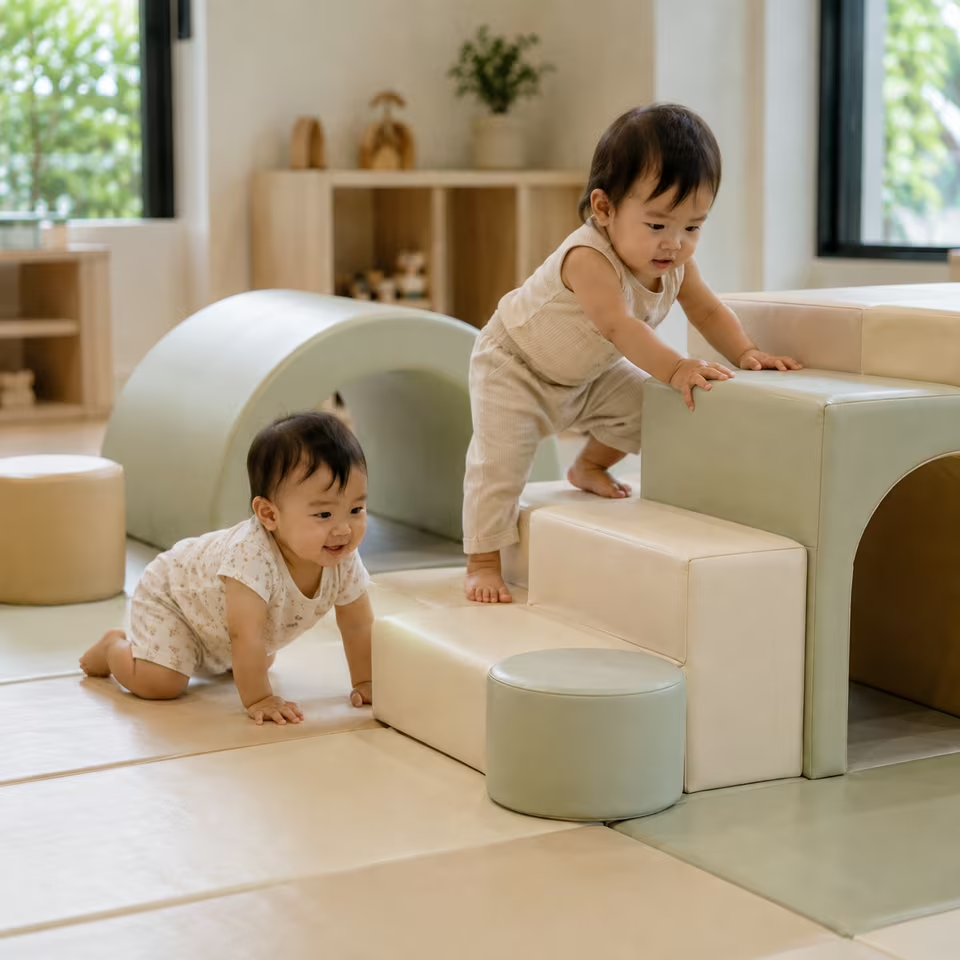
What kind of soft play is suitable for 1-2 year olds?
Look for play environments that match the child's current mobility and provide room for independent exploration. Open floor space, simple soft forms, approachable level changes and short routes can offer more useful play than an unnecessarily complex structure.
What soft play is good for a 1-year-old?
A one-year-old may be crawling, moving between positions, walking with support or beginning to walk independently. Choose a setup that works with the child's current movement rather than assuming one configuration is right for every child of the same age.
What play equipment is suitable for a 2-year-old?
Children approaching two may be interested in moving through a larger portion of the play environment and repeating simple routes. Equipment should still be selected according to individual ability, intended use and the guidance provided for each play component.
Should soft play for toddlers include climbing?
Approachable changes in level can add useful variety, but a toddler play area does not need to depend on height. Low steps, slopes and other simple transitions can create interesting movement while remaining integrated with floor-level play.
Does a toddler soft play area need a lot of equipment?
No. Too many components can reduce usable movement space. A smaller number of thoughtfully arranged features with enough room between them can create more routes, choices and opportunities for repeated play.
How do I choose a soft play set for a small space?
Prioritize usable movement over the number of features. Look at how children enter, move around, change levels and leave each activity, and preserve enough open space for the layout to remain comfortable rather than filling every available area.
Can a 1-2 year old use an indoor slide?
Suitability depends on the individual child and the specific product or play feature. Consider the intended age range, approach, height, landing area and how the child currently moves rather than using age alone as the deciding factor.
What should I look for when buying soft play for toddlers?
Consider the child's current mobility, available space, usable routes, changes in level, adult access and how the equipment may continue to offer useful play as movement abilities change. Individual product guidance should also be checked before use.